Introducing My Substack: Writing Alongside Teaching and Learning in Social Work
For many years, Teaching and Learning in Social Work has been a central space for my writing about pedagogy, curriculum, and the practice of social work education. It has allowed me to think publicly about teaching, supervision, and professional learning, and to stay grounded in the values that shape my work.
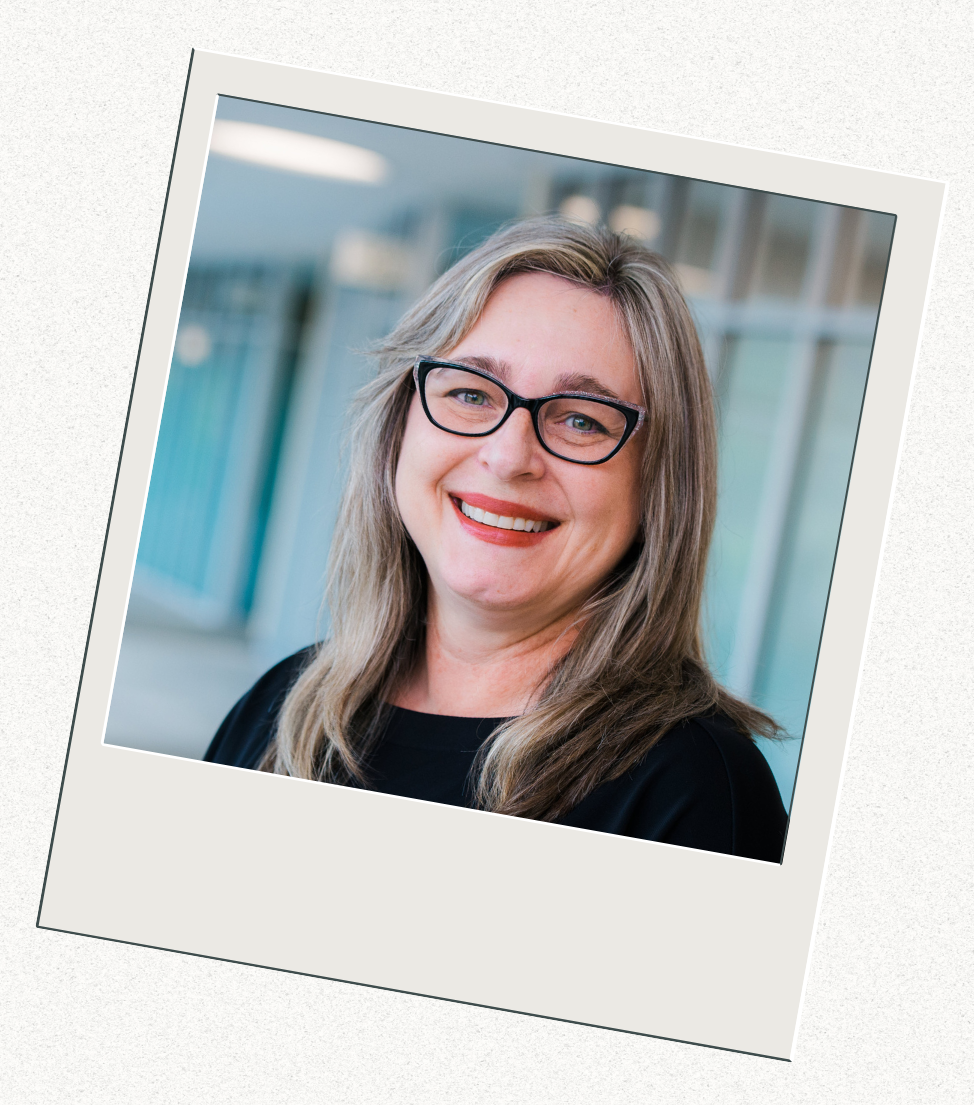
I am excited to share that I am launching a Substack as a complementary space for my writing—one that will work alongside, rather than replace, this blog. You can find the Substack here: https://laureliversonhitchcock.substack.com/
Why Add a Substack?
Writing has always been how I make sense of my work and how I stay accountable to it. As a social work educator, clinical social worker, coach, and consultant, I spend much of my professional life thinking with others about learning, practice, supervision, ethics, identity, and change. Substack offers a different kind of writing environment: slower, more reflective, and more conversational.
This new space allows me to write in ways that do not always fit neatly into traditional blog posts or academic outlets, while still remaining grounded in scholarship, practice wisdom, and values-informed reflection.
How the Two Spaces Will Work Together
The Social Work Dimensions of Diversity Library Guide
One of my favorite parts of teaching social work is watching students discover the connections between theory and practice, especially those moments when social justice moves from abstract ideas to meaningful frameworks for understanding the world. Finding the right learning resources, such as a book, movie or podcast, to facilitate those discoveries hasn’t always been easy.
Like many of you, I’ve spent countless hours searching for materials that do more than just acknowledge diversity. I wanted resources that helped students understand how systems of power and privilege actually shape people’s lives, materials that centered the voices of those most affected by oppression. I also realized that if I, as a full-time educator, was spending a lot of time finding these resources, our adjunct faculty might be struggling too. Given that the Council on Social Work Education’s 2022 Educational Policies and Accreditation Standards (CSWE, 2022) now embeds requirements for diversity and equity content throughout social work curricula, I wanted to find a way to curate and share resources.
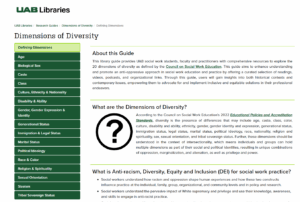
This idea led to an exciting collaboration with Dana Hettich, a reference librarian at the University of Alabama at Birmingham (UAB) Libraries. Together with help from Lana Turner, MSW Student and soon-to-be UAB alumnus, we developed the Social Work Dimensions of Diversity Library Guide, a project that has become more than just a teaching resource. It’s evolved into a living, collaborative space where students, faculty, and librarians work together to build something meaningful.
Call for Contributions: Help Us Expand the Community-Engaged Learning Toolkit
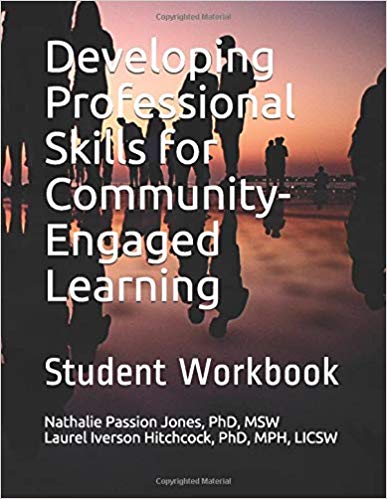
My colleagues, Drs. Nathalie Jones, Melanie Sage, and I are excited to invite submissions for an expanded edition of the Professionalism for Community-Engaged Learning Student Workbook and a new Educator’s Guide. This expanded resource will enhance teaching and learning by offering structured assignments, reflective activities, and instructional strategies that prepare students for professionalism in community-based learning.
About the Project
The Professionalism for Community-Engaged Learning Student Workbook is part of the Professionalism for Community-Engaged Learning Toolkit. This Toolkit provides resources and learning activities emphasizing the practical skills and knowledge necessary for novice student learners to thrive in community-engaged learning projects (such as volunteering and service learning) in higher education.
Drawing from Social Work Education and applicable to other fields, this workbook is designed to assist student learners in developing the knowledge and skills essential for a professional demeanor during community-engaged learning projects, concentrating on behavior, appearance, and communication in oral, written, and electronic formats. The workbook includes three sections:
Use of an ADEI Assessment Tool to Examine Social Work Curricula

On October 25, 2024, during the Annual Program Meeting for the Council on Social Work Education in Kansas City, MO, my UAB colleagues (Colleen Fisher, Mary Jacque Carroll and Ron Pitner) and I presented an assessment tool developed by Melissa Freedman, MSW, to review syllabi and courses as an effort to ensure the integration of antiracism, diversity, equity, and inclusion (ADEI) within our program curricula at the University of Alabama at Birmingham’s Department of Social Work. We used this tool to assess course content in our Bachelor’s, Master’s and Field Education courses. In this blog post, we provide access to the tool and slides from the presentation.

Teaching & Learning in Social Work by Laurel Iverson Hitchcock is licensed under a Creative Commons Attribution-NonCommercial-ShareAlike 4.0 International License